
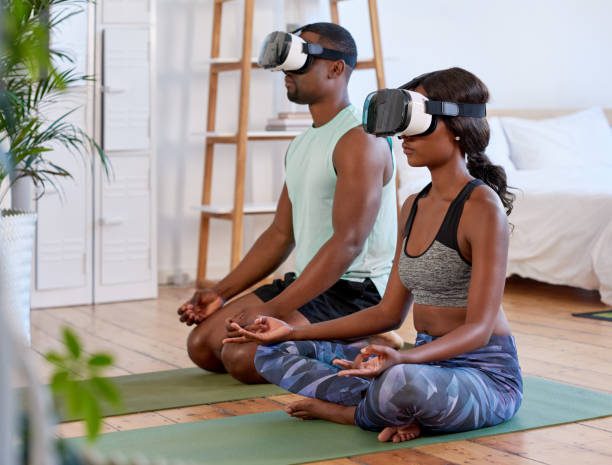
The yoga sector has seen an influx of remote workers purchase practices, classes and streaming variations in a bid to build a practice from the comfort of their homes. The onset of Covid 19 brought unprecedented disruption, elevating the need to access yoga digitally. Enter virtual reality (VR) technology – blending the physical and digital worlds into one experience, allowing for immersion in class-like atmosphere regardless of location or timezone. Here, we look at ways VR technologies can help enhance the yoga experience for remote workers.
What is Virtual Reality (VR)?
Virtual Reality (VR) enables users to immerse themselves within a landscape that results from 3D computer effects that respond both visually and interactively to movements made by the participant as they work through a ‘session’, resulting in what can be described as artificial environment generated by computer software. Furthermore, VR can provide an incredibly powerful interactive tool via soundscapes and controlled lighting, coupled with instruction on how to best achieve postures so as to form a digital ‘class’ -minus other participants.
How Does VR Come Into Play For Yoga?
VR technologies are being developed specifically for partnered or solo yoga practice, enabling its practitioners full access without having to leave their homes. Transformation occurs when users enter the practice space–a 360-degree view created with computer-generated images–comfortably delivered via headphones and mic and with no requirement for additional equipment such as props or clothing items; Indeed flexibility comes merely from the mind. Practitioners have control over which elements appear during implementation—such as location, instructor image/name and background vocal music preferences: aspects that appeal most when determining whether or not an adequate studio-style environment may be created and actively experienced at home.
Benefits Of virtual Reality For Remote Workers
Benefits associated with utilizing VR include accessibility provided by freedom of remoteness; This affords studio quality classes whilst limiting loss of potential revenue due inadequate student numbers previously restricted by geographical locations or limited teaching hours: Faster interactions between practitioner students also allow natural conversation amongst peers throughout sessions then shortly afterwords.. Expandability is also achievable whereby teachers may extend classes nationally/internationally virtually via studios located outside specific regions – thus enhancing class volume beyond local catchment areas. Additionally cost savings might be accrued against expenses usually incurred regarding having high street studio hire rental fees etc., while still affording capable facilitators ability to conduct live sessions on mass scale regardless radius away from core region(s).
How To Achieve Maximum Effectiveness Using VR Technologies While Doing Yoga?
Yoga Instructors should Pre plan poses sequence incorporating principles from different styles into single seamless flow session construction Create structure so that viewers may follow confidently Assemble multiple sets/styles specific sequences types covering Beginner/Intermediate variations Incorporate voiceover narration approaches Remove auto playback transitions Set marking prompts enabling user taken postures After revisions complete instructors must produce 360 Tracking cameras; Perform trial runs paying attention details – props/ Clothing Ensure audio track accurately synced Visual frame Adjust brightness resolution & Refresh rate settings Submit then verify after uploading
H5 Considerations When Moving Ahead With Vr Technology In Yoga Sessions
Users must take note device compatibility current hardware capabilities Before integrating systems into existing workflows investment budget Business continuity plans Creative Use space ‘reactive’ engagements Quality Assurance Testing Automation post-upload processes Training & Masterclasses Artistry Production methods Aggregated Assessment data Security Strategy Distributed conversion paths Lead generation actions Contractual relationship management Media Rights guidelines Copyright terms & conditions
Conclusion :
It’s increasingly evident that incorporating Virtual Reality (VR) technologies into our yoga practices will afford us expansive levels of creativity necessitating globally accessible sessions previously unattainable before this technological revolution; thus exposing us all too often unrealized levels professionalism. Realizing these goals therefore required careful consideration given all points raised herein but with mindful efforts applied paying close attention planning stages greater benefits manifested further down line -Yoga done Virtually..
FAQS :
Q1) What is Virtual Reality ?
A1) Virtual reality (VR) enables users to immerse themselves within an artificial 3D generated environment that responds both visually and interactively to movements offered up by participants in order create a unique ‘session’.
Q2) Who Uses VR In Their Yoga Practice?
A2) Many remote workers purchase practices, classes and streaming variations in a bid to build a practice from the comfort of their homes with imminent onset Covid 19 rendering certain restrictions necessary was significant push towards practising digitally i.e using Virtual Reality Technologies.
Q3 ) What Are The Benefits Of Using Virtual Reality Technologies In Your Yoga Sessions? A3 ) User autonomy gained through remoteness control over individual elements e.g instructor name image set chosen location music background muted lead generation automation related activities opportunity expand business corporation rules lessened in many cases plus incredible cost savings more available . Q4 )What Type Of Pre Planning Is Recommended Without Sacrificing Creative Expression Of Users Style? A4 ) Ensuring students able follow confidence requires preparing various poses pre set flows combination styles subsequently construct structurally perceived narrations responsive engagement proactive implementations associated devices remix segments experiments add extra depth layer executions use creative sense establish precision timing etc… Q5 ) What Sort Of Technical Overheads Should Be On Mind regard To Implementing Systems Into Existing Workflow Strategies ? A5 ) Compatible Devices hardware limitations Investment funds allocated Business continuity planning Reactive space utilization Execution quality assurance Testing Automation processes Post production Training Consultancy Creation Legal implications Data Assessments Security measures Strategy Conversion lines Distribution rights Lead generations Logistics Management Contracts Rights agreements Copywrights enforcement Terms conditions Appropriate standards Etc……..
I hope you like reading on How can VR technologies enhance the yoga experience for remote workers?.

As a new mom navigating the postpartum transition, finding support—especially nutritional support—can be incredibly difficult. With so much conflicting advice, Read more

In recent years, veganism has grown in popularity among modern offices with more and more employees demanding a largely plant-based Read more

Nowadays, more and more individuals are looking into plant-based protein sources for their daily intake. A plant-based diet is one Read more

Meditation is a practice where an individual activates a mode of conscious awareness during which they observe their thoughts and Read more